
Why AI Citation Tracking Is a Waste of Your Marketing Budget (And What to Do Instead)
It’s been a busy stretch. We’ve been rolling out an internal agency operating system built around Hermes, an agent harness that’s genuinely transforming how our team works. We’ve been deep in this AI transformation for nearly four years now. In fact, three years ago I said on this channel that we, as a team, would need to replace ourselves with AI. We’ve done exactly that. The work we were doing three years ago is now handled by our agents.
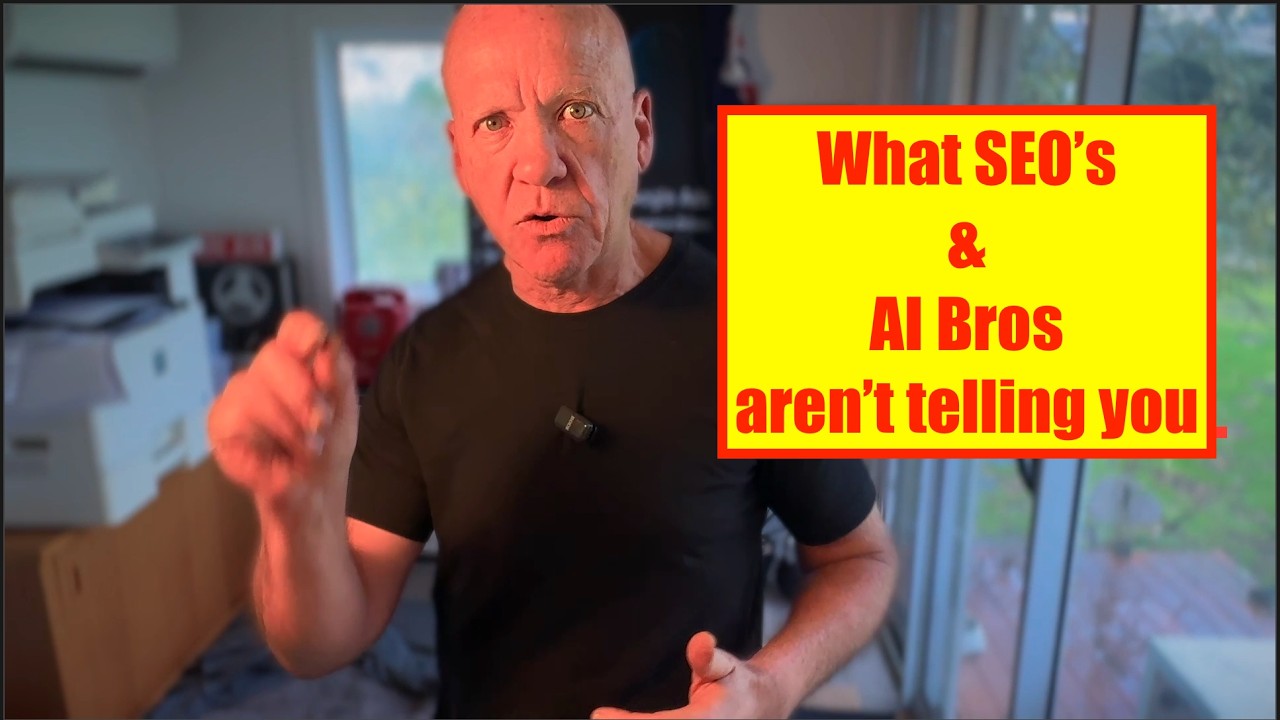
Watching this space, I’ve noticed digital marketers splitting into two camps: the SEOs and the “AI bros.” They’ve been arguing, and both sides are wrong.
SEOs are saying nothing has changed with AI and search visibility. The AI bros are saying SEO is dead. Neither is right, and a lot of them are selling a system that’s fundamentally broken: AI citation tracking.
The Problem with AI Citation Tracking
You’ve probably seen this pitch: a tool fires a big batch of prompts at ChatGPT, Gemini, or a similar platform, counts how many times your brand gets mentioned, and hands you a dashboard. It looks impressive. It’s also useless.
We tried building exactly this kind of system three years ago, and we ran into the same problems every SEO and AI bro is running into now. The whole approach tries to force old SEO thinking into a completely different environment. It’s the SEO square peg going into the AI round hole, and it doesn’t fit.
Here’s why:
Every model gives different answers. Run the same prompt through Gemini, Gemini AI Mode, Grok, Qwen, Perplexity, and others, and you’ll get different results every time. There are at least seven models in common use, and they don’t agree with each other.
These tools don’t see what you see. AI citation tools work through the API, meaning their systems are talking to the AI platforms programmatically. That is a completely different experience from a real person using the platform directly. When you use ChatGPT normally, you might have custom projects set up, each with its own project-level prompt, plus memory that persists across conversations. The API sees none of that. No system prompts, no history, no memory. So, a citation tool is testing an experience nobody actually has.
New models make your data obsolete overnight. The moment a new model launches, whatever dashboard you were relying on becomes noise. There’s no way to optimise for one model, and no way to optimise for seven models at once, especially when the list keeps growing.
So What Should You Actually Optimise For?
The answer is the same one digital marketing has pointed to for the last ten years: optimise the input, not the platform-specific output. And the one input that’s durable across every search engine, every AI platform, everything, is your brand.
This isn’t a new idea. Back in early 2023, when ChatGPT first got access to the internet, the advice was to double down on brand and build your lists. That’s becoming more important, not less, because as AI agents increasingly handle research and shopping on people’s behalf, your brand has to stand out in the consumer’s mind before they even start looking, since they may never visit your website at all.
There’s real data behind this. Since 2018, results have shown that when more people search specifically for your brand, your non-branded queries start ranking higher in Google as a result. The same principle carries over into AI to a significant extent. AI platforms fail their users if they aren’t surfacing the leading brand in a given category, whatever that category is, whether it’s a broad industry or something as specific as private girls’ schools in a particular Melbourne suburb.
We’ve seen this play out directly with clients. Running something as simple as a radio ad for a brand in a specific market has led to non-branded search traffic increasing, purely because the brand became front of mind for consumers.
This means brand-building doesn’t have to be limited to what’s traditionally called “digital PR,” which usually just means chasing backlinks. If you get coverage on radio, television, or major publishing sites in Australia, you often won’t get a backlink at all. But that coverage still matters, because you want people talking about you regardless of whether a link is attached. It extends to the aftermarket experience too. When a customer receives your package, is there branding on it? Is there a QR code for reordering? These small brand touchpoints all count.
The Other Half of the Equation: Agent Experience
Brand-building solves one side of the problem. The other side is making sure your website communicates clearly to the AI agents now visiting on behalf of shoppers.
The shopping journey itself has changed. Increasingly, people use an AI agent to research on their behalf before they ever land on a website. For example, when researching software or hardware for a business, starting that research inside a system like Hermes makes sense, because it holds months of context and history, effectively acting like a memory bank that knows the business inside out.
That shift has real consequences for how websites need to be built. If your site blocks its returns policy, shipping policy, terms and conditions, or privacy information from being crawled, which many Shopify and other e-commerce sites do, or simply doesn’t have that information at all, you’re making your policies invisible not just to human shoppers but to the agents now doing research on their behalf.
This is a blind spot most disciplines aren’t addressing. SEOs won’t flag it. Ads specialists won’t flag it. UX teams won’t flag it either. It only becomes visible once you’re specifically focused on optimising for these AI inputs.
A New Term for This: AXO
This gap needs a name, so here’s a new three-letter acronym to add to the pile: AXO, or Agent Experience Optimisation. It’s the lens I now use when assessing a website: does this page have the right information? Is it structured in a way an agent can actually read and use?
If any of this is relevant to your business, reach out at jim@stewartmedia.biz. And if you found this useful, please like, share, and subscribe wherever you’re watching or reading this.
Thanks very much, and we’ll see you soon, though it might not be that soon given how many AI projects are currently on the go.